THE URBURN COLLECTIVE
Team
Indulekha Nair, Beatriz Tzung, Minghui Li, Pallavi Salecha
Studio Instructor
Jeffrey Inaba, Shaun McCallum
Year
2021-22
Type
Academic
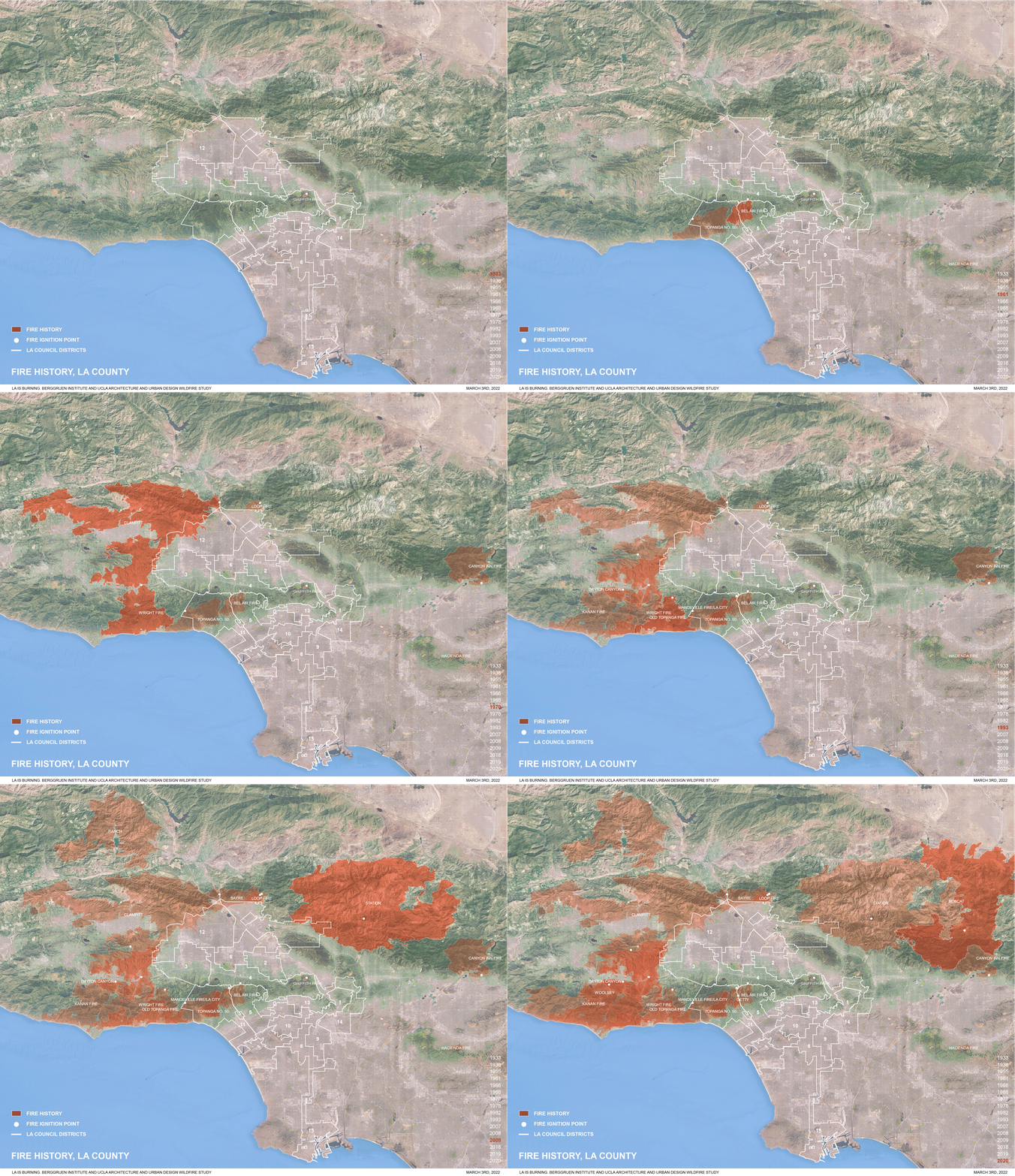
Wildfires have disproportionate impacts on communities living in high-risk areas, with greater damage seen amongst those who are socially vulnerable. Through a case study approach, the project aims to explore a replicable model of enhancing community resilience by facilitating co-dependency.

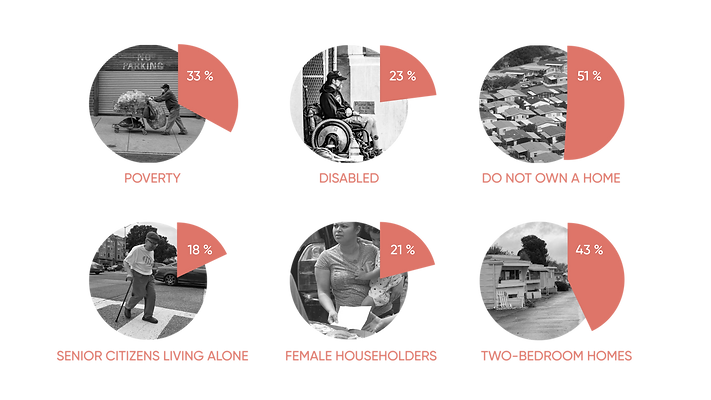
Fire intensity and recurrence increase every year and the most vulnerable are suffering from this phenomenon. Socially vulnerable people that live in fire-prone areas suffer more fire damage, because of the fires, the land loses its value and attracts even more socially vulnerable people, creating a vicious circle. By neutralizing the socially vulnerable component of the vicious circle, it will have a compounding positive influence on the extent of fire damage and land value, turning it into a virtuous circle. Communal living in small towns can serve as a means to boost social capital as well as increase resilience to wildfires.
.png)
Through fostering a co-dependent relationship between senior citizens and female householders, the strategy aims to minimize social isolation and instead encourage the formation of communal ties and non-family support systems for day-to-day-activities as well as fire response.

.png)
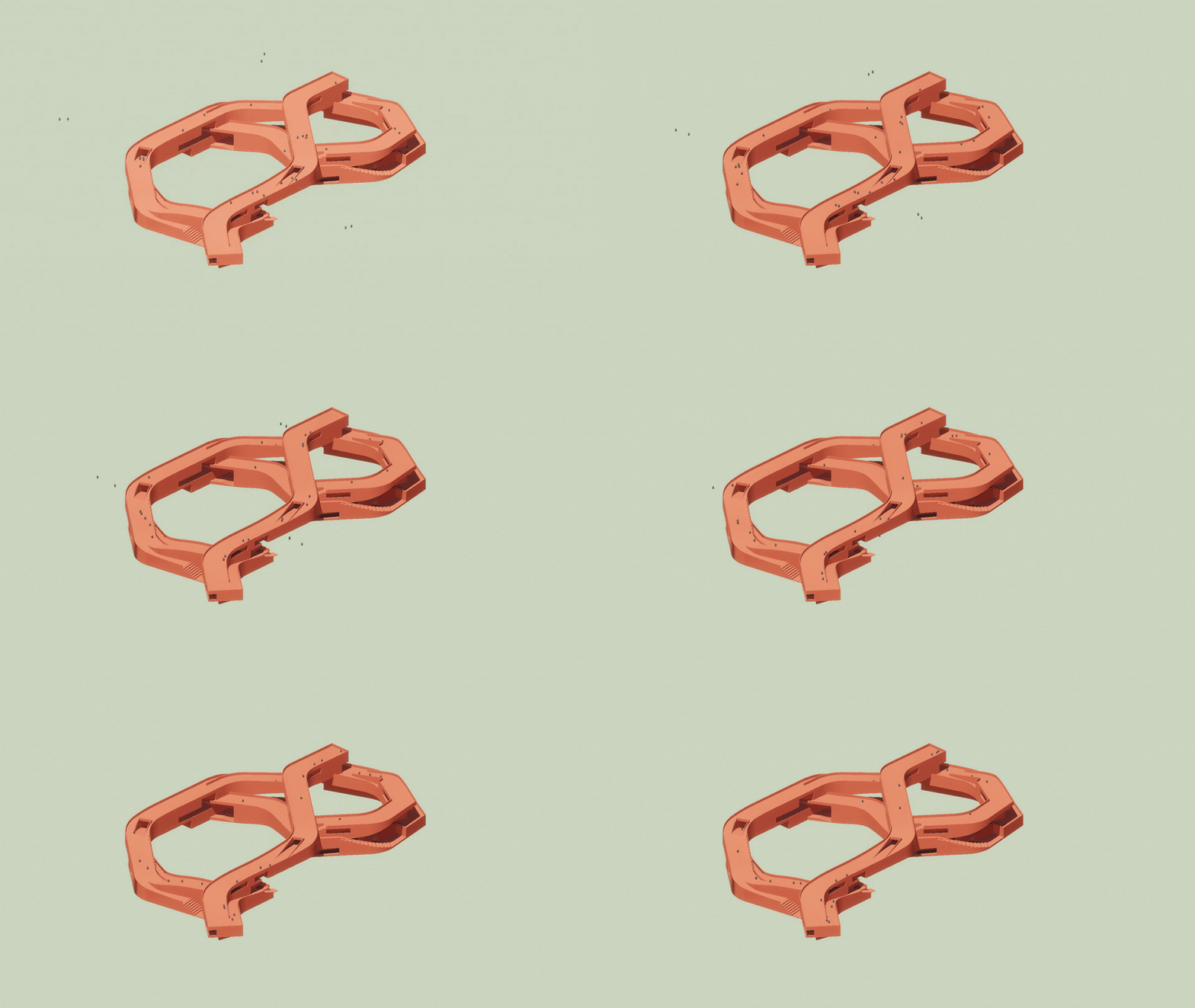
CIRCULATION SIMULATION
The intersection of two modules doubles in function as social spaces as well as vertical circulation cores. The functionality of these spaces can then be decided by residents based on their needs.
The form is a further exploration of the courtyard typology. By joining modules, continuous ribbon-like linkages are created, that enclose shared courtyards of varying sizes. Some of these stacked modules are then elevated, to create volumetric variations that reform the courtyard, enabling better circulation and visual connectivity.


The question to address becomes "How can we mitigate damage?", rather than how can we prevent wildfires from happening. Channeling a small fraction of the cost of recovery towards building a social culture, can substantially reduce the overall extent of damage while still meeting the housing demand.